

The concept of ‘job talent’ has fundamentally changed. For decades, it meant a qualified person with the right credentials applying to a specific open position. Today, job talent refers to something far more expansive and dynamic: a living, breathing ecosystem of skilled professionals, some actively job-seeking, some passively open to the right conversation, some being developed in real time through gig work and project-based engagements that your organization can tap into continuously, not just when a role opens up.
US companies that understand this shift are building talent pipelines, not just filling vacancies. They are treating job talent as a strategic asset class, not a reactive HR transaction. And they are partnering with All Talentz to do it at scale, with intelligence, and with speed that their competitors simply cannot match.
This guide is your complete roadmap to understanding, sourcing, evaluating, and securing job talent in the US in 2026, whether you are hiring locally, nationally, or leveraging the full power of the remote work revolution.
The 2026 Job Talent Landscape: What Every US Employer Needs to Know
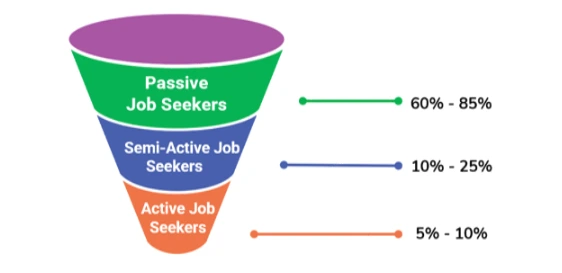
The 70-30 Rule of Job Talent
One of the most powerful and consistently underutilized insights in talent acquisition is this: at any given moment, only 30% of the ideal candidate for your open role is actively searching for a new position. The other 70% the majority of the job talent market, including many of the highest performers are currently employed, not actively looking, but would be genuinely open to hearing about the right opportunity if it were presented compellingly.
This means that if your talent acquisition strategy consists entirely of posting a job and waiting for applications, you are systematically excluding yourself from 70% of the available job talent market. You are fishing in a pond that contains roughly one-third of the fish.
All Talentz was architected specifically to address this reality. Our platform enables you to reach both active and passive job talent simultaneously, using intelligent outreach tools that respect candidate preferences while dramatically expanding the quality and breadth of your candidate pool.
The Remote Expansion of US Job Talent Access
Before 2020, most US employers defined their job talent pool by geography: the people who live within commuting distance of the office. That constraint has been irreversibly shattered. In 2026, a company in Des Moines can hire a world-class data scientist who lives in Miami. A startup in Boston can build its entire engineering team with US-authorized professionals scattered across 22 states. A retail group in Atlanta can have its digital marketing function run by a remote team that has never been in the same zip code.
The companies that embrace this geographic liberation of job talent are building organizations that are more skilled, more diverse, more resilient, and frankly, more cost-effective than those that still arbitrarily constrain themselves to local hiring.
The 5 Categories of Job Talent Every US Employer Needs to Understand
Category 1: Active Job Seekers
These professionals are actively searching for a new position right now. They are submitting applications, updating their LinkedIn profiles, and attending networking events. The advantage of active job seekers is immediacy; they have a high sense of urgency and are likely to move quickly through your hiring process. The challenge is competition: every other employer is targeting this same group, which is both smaller and more contested than any other segment of the job talent market.
Category 2: Passively Open Professionals
This is the largest and highest-value segment of the job talent market. These professionals are employed, performing well, and not actively searching, but if the right opportunity were presented at the right moment through the right channel, they would engage. Reaching this group requires a proactive, relationship-first approach, and it is exactly why All Talentz’s outreach tools are among the most valuable features on the platform.
Category 3: Career Transitioners
These are professionals who are moving between industries, pivoting from one discipline to another, or re-entering the workforce after a deliberate break. They represent one of the most undervalued talent pools in America, and they are disproportionately represented among diverse professionals. A former military logistics officer moving into supply chain management brings real-world operational experience that no business school curriculum can replicate. A software engineer transitioning into product management brings technical empathy that purely business-educated PMs will never have.
Category 4: Gig and Project Talent
The gig economy has matured into a sophisticated talent market. An estimated 73 million Americans now engage in some form of freelance or project-based work, and many of them are not doing so because they cannot find traditional employment; they are doing so because they prefer the autonomy, variety, and economic upside of independent work. For US employers, this represents an enormous and largely untapped reservoir of job talent for project-based needs, seasonal surges, and specialized skill requirements.
Category 5: Boomerang Talent
Former employees who left on good terms, developed new skills elsewhere, and are now returning to the market represent one of the highest-ROI hiring segments available. They already understand your culture, your systems, and your team dynamics. Their onboarding time is a fraction of an external hire. All Talentz’s alumni engagement tools help US employers maintain structured relationships with departed talent so that when the time is right, re-engagement is seamless.
How to Evaluate Job Talent: Moving Beyond the Resume in 2026
The Resume Is Dead. Long Live the Skills Portfolio.
The resume was invented in an era when employers could reasonably infer that a degree from a certain institution or employment at a certain company was a reliable proxy for capability. That proxy relationship has broken down completely. In 2026, the most capable professionals in many fields did not follow the traditional credential pathway. They built skills through bootcamps, open-source contributions, freelance projects, self-directed learning, and on-the-job experience in roles that do not have neat titles.
The employers who restrict themselves to credentialist resume evaluation are not filtering for quality. They are filtering for conformity to an outdated system, and in the process, they are missing enormous swaths of extraordinary job talent.
The All Talentz Skills-First Evaluation Framework
Every candidate on the All Talentz platform is evaluated through a multi-dimensional framework that goes far beyond credentials:
- Verified Skills Assessments: Role-specific, standardized assessments developed in partnership with industry practitioners. These are not generic IQ proxies; they measure actual job-relevant competencies.
- Work Sample Portfolio: Candidates submit real examples of their past work, code repositories, writing samples, design portfolios, campaign results, and financial models. You evaluate the output, not the resume.
- Structured Peer References: Unlike traditional references that are notoriously unreliable, All Talentz collects structured, standardized peer assessments that give you a genuine signal about how a candidate collaborates, communicates, and performs under pressure.
- Behavioral Signal Index: Our AI analyzes behavioral patterns across the platform, how candidates communicate, how thoroughly they complete their profiles, and how they respond to outreach, to create a composite engagement and professionalism score.
- Cultural Fit Indicators: Through a validated psychometric assessment, All Talentz maps candidates’ working style, decision-making preferences, and value alignment to help predict long-term retention fit with your specific organizational culture.
Building a Year-Round Job Talent Pipeline: The All Talentz Approach
Stop Hiring Reactively. Start Building Proactively.
The most expensive and disruptive talent acquisition scenario is the reactive hire: a key person leaves unexpectedly, a growth milestone accelerates faster than projected, or a new capability need emerges from a strategic pivot, and you are starting the hiring process from zero. No pipeline. No warm candidates. No relationships. Just a new job posting going live in a competitive market, and a 60-90 day time-to-fill that costs you real business value every single day the role sits empty.
The solution is a continuous, always-on talent pipeline. All Talentz makes this possible in three concrete ways:
Talent Pools: Your Pre-Qualified Candidate Database
All Talentz allows employers to create and continuously update curated talent pools — segmented by role type, skill set, geography, and availability- that can be activated instantly when a hiring need emerges. Every interaction with a candidate, every assessment result, and every note from a previous conversation is stored, searchable, and actionable. When the need arises, your best candidates are already warmed up and familiar with your brand.
Proactive Outreach Campaigns
Using All Talentz’s outreach tools, you can run passive talent engagement campaigns that reach the 70% of the market that is not actively job seeking, without being spammy, intrusive, or tone-deaf. Our templates are personalized, role-specific, and calibrated to the communication preferences of each candidate segment.
Skills Gap Forecasting
All Talentz’s enterprise workforce planning tools include a skills gap forecasting module that analyzes your current team composition, your projected growth trajectory, and real-time market data to identify which capabilities you will need to hire for in the next 3, 6, and 12 months. This allows you to start sourcing and building relationships with the right job talent months before the role officially opens.
The Advantage of All Talentz for Remote-First US Job Talent
For employers who are remote-first or remote-friendly, All Talentz’s platform specifically identifies candidates who have been verified as effective remote workers — professionals with demonstrated track records of async communication, self-directed project management, and high-output independent work. This verification layer removes the single biggest risk of remote hiring: bringing on someone who says they can work remotely but has never actually been tested in that environment.
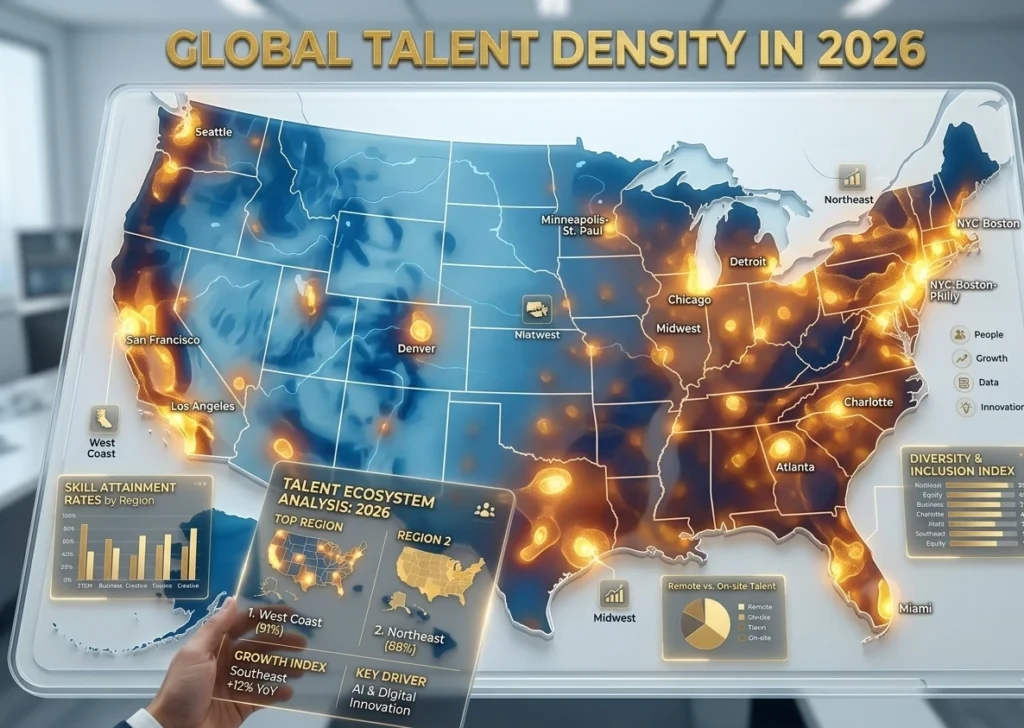
The All Talentz Advantage: Why US Employers Choose Us to Find Job Talent
In a crowded market of job boards, staffing agencies, and AI-driven recruiting tools, All Talentz stands apart in five fundamental ways that matter to serious US employers:
- Quality over volume: We do not measure success by the number of applications you receive. We measure it by the quality of the first five candidates we surface. Our average employer-to-hire ratio is 8:1. The industry average is 52:1.
- Speed without compromise: Our median time-to-first quality-candidate is 72 hours. Our median time-to-offer is 11 business days. This velocity does not come at the cost of quality; it comes from the infrastructure of verified, pre-assessed talent that we have built.
- Transparent and predictable pricing: Flat-fee posting, subscription-based access, and enterprise custom plans with no success fees or retainer surprises.
- Real human support: Every employer on All Talentz has access to a dedicated US-based talent advisor who can guide role definition, candidate evaluation, offer negotiation, and onboarding strategy.
- Continuous platform improvement: All Talentz deploys platform updates every two weeks, driven by employer and candidate feedback. The platform you use in Q4 will be meaningfully better than the one you use today.
The companies winning the talent wars in 2026 are not necessarily the ones with the biggest recruiting budgets. They are the ones with the best systems, the clearest employer brands, and the most intelligent platform partnerships. All Talentz is that partnership.
Frequently Asked Questions About US Job Talent in 2026
In 2026, U.S. companies are shifting away from traditional, location-based hiring and embracing global, remote-first talent strategies. Instead of limiting their search to local candidates, businesses now hire talent from international markets, especially Africa to access highly skilled professionals at competitive rates. This approach allows companies to reduce hiring timelines, lower operational costs, and build more diverse, high-performing teams.
Remote staffing offers flexibility, cost efficiency, and access to a broader talent pool. U.S. employers can hire remote talent without the overhead costs of office space, relocation, or expensive local salaries. Additionally, remote professionals are often experienced in digital collaboration tools, making them highly productive from day one. This model also supports scalability, allowing companies to grow teams quickly as business needs evolve.
African talent is increasingly recognized for its technical expertise, strong work ethic, and cost-effectiveness. Countries like Nigeria, Kenya, and South Africa are producing highly skilled professionals in tech, finance, marketing, and operations. Many of these professionals have experience working with global companies and are fluent in English, making communication seamless. Hiring African talent allows U.S. businesses to access top-tier skills without paying premium local rates.
Smart companies in 2026 use structured assessment processes that go beyond resumes. This includes technical tests, real-world task simulations, behavioral interviews, and cultural fit evaluations. Many also rely on vetted talent platforms or staffing partners to pre-screen candidates. The goal is to ensure candidates not only have the right skills but can also perform effectively in a remote work environment.
Yes, outsourcing to Africa is highly cost-effective. U.S. companies can save significantly on salaries while still accessing top talent. Beyond salary savings, businesses also reduce costs related to office infrastructure, benefits, and recruitment processes. Despite the lower costs, the quality of work remains high, making it a strong return on investment for companies of all sizes.
Many roles are now successfully filled through remote hiring, including software development, digital marketing, finance and accounting, customer support, sales, legal support, medical billing, and project management. Additionally, specialized roles such as estimators, lead generation experts, and operations managers are increasingly being outsourced. These roles rely on digital tools and processes, making them ideal for remote professionals.
Companies manage remote teams effectively by using collaboration tools like Slack, Zoom, and project management platforms. Many African professionals also work in overlapping hours with U.S. time zones, ensuring real-time communication when needed. Clear processes, defined expectations, and regular check-ins help maintain alignment and productivity across distributed teams
Common concerns include communication gaps, quality control, and data security. However, these risks can be minimized through structured onboarding, clear KPIs, secure systems, and regular performance tracking. Partnering with a trusted remote staffing provider also helps ensure candidates are vetted, reliable, and aligned with company standards.
With modern remote staffing solutions, companies can hire talent in a matter of days or weeks rather than months. Pre-vetted talent pools and streamlined recruitment processes significantly reduce time-to-hire. This speed is especially valuable for businesses that need to scale quickly or fill urgent roles.
The most forward-thinking companies recognize that talent is no longer limited by geography. By adopting global hiring strategies, they gain a competitive advantage through access to diverse skills, faster hiring, and lower costs. In a fast-moving business environment, the ability to quickly secure top talent, regardless of location, is a key driver of growth and innovation.



I really appreciate how this post highlights the shift from reactive hiring to building ongoing talent pipelines. The focus on engaging not just active job seekers but also passive professionals and gig talent feels very aligned with the evolving job market. It’s clear that companies treating talent as a strategic asset are positioning themselves for long-term success.
The shift from filling vacancies to building talent pipelines is exactly what separates forward-thinking companies from the rest. It’s fascinating to see how the 70-30 rule and the categorization of job talent help organizations think beyond traditional hiring models. This approach not only improves speed and efficiency but also unlocks access to a more diverse and dynamic pool of professionals—especially with the remote expansion of talent pools. Thanks for the insightful breakdown of how companies can future-proof their hiring strategies.